

 English
  Indonesian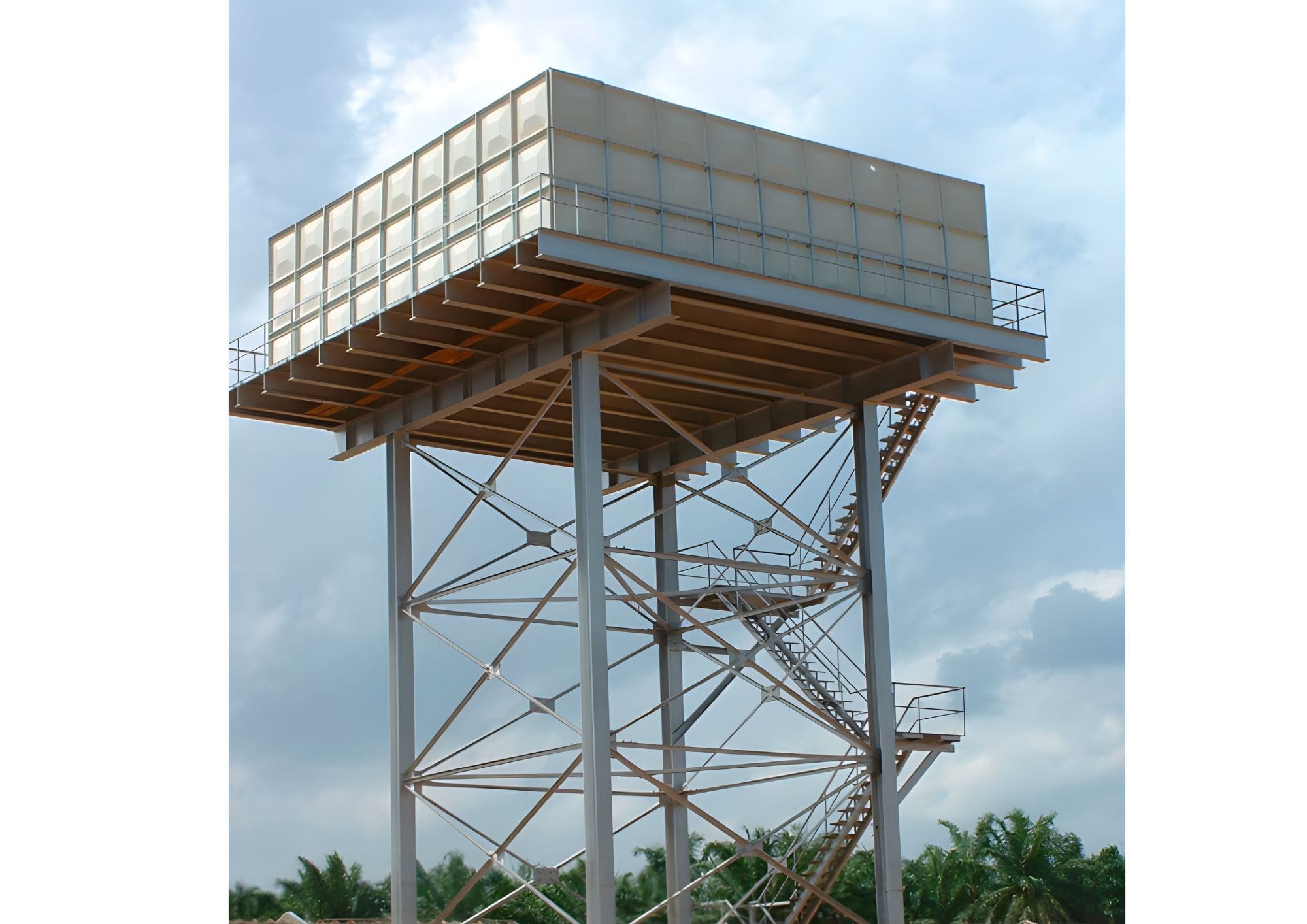
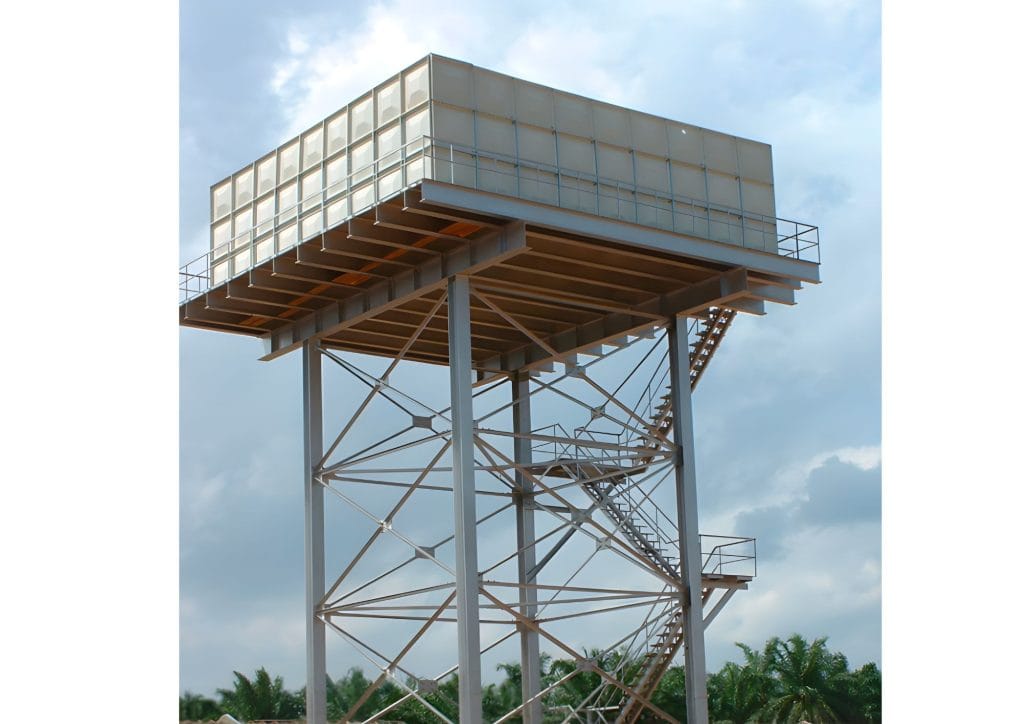
FRP and GRP water tanks are both popular choices for storing potable water, rainwater, industrial water, and more. They offer excellent corrosion resistance, lightweight design, and long service life. But what’s the real difference? In most cases, there is no significant practical difference for water storage applications — the terms are often used interchangeably.
This guide explains the key distinctions, similarities, and when it matters for your water tank needs.
Understanding FRP: Fiber Reinforced Plastic
FRP stands for Fiber Reinforced Plastic (or sometimes Polymer). It is a broad category of composite materials where a plastic resin matrix is strengthened with various fibers.
- Fibers can include glass, carbon, aramid, or others.
- In practice, most FRP water tanks use glass fibers as reinforcement.
- Common in North America (US terminology).
- Versatile for many applications beyond water tanks.
Understanding GRP: Glass Reinforced Plastic
GRP stands for Glass Reinforced Plastic. It is a specific type of FRP where the reinforcing fiber is exclusively glass (fiberglass).
- Also known as fiberglass reinforced plastic.
- More commonly used term in Europe, Asia, Australia, and the Middle East.
- The vast majority of “FRP water tanks” sold worldwide are actually GRP (glass-reinforced).
Key Differences: FRP vs GRP Water Tanks
| Aspect | FRP (Fiber Reinforced Plastic) | GRP (Glass Reinforced Plastic) | Practical Impact for Water Tanks? |
|---|---|---|---|
| Full Form | Fiber Reinforced Plastic/Polymer | Glass Reinforced Plastic | Terminology only |
| Reinforcement Fiber | Any fiber (glass, carbon, aramid, etc.) | Specifically glass fibers | Almost always glass in water tanks |
| Regional Usage | Common in North America | Common in Europe, Asia, Middle East | Naming convention varies by region |
| Material Properties | Depends on fiber type | Excellent corrosion resistance, strength, durability | Virtually identical for water storage |
| Manufacturing | Similar processes (filament winding, hand lay-up, panel assembly) | Same as FRP when glass is used | No meaningful difference |
| Cost | Varies by fiber; glass versions similar | Generally standardized and cost-effective | Comparable |
| Applications | Broader (chemicals, aerospace, etc.) | Ideal for water, wastewater, potable storage | Both excellent for water |
Bottom line: For water tanks, what people call an “FRP tank” is typically a GRP tank using glass fibers. The performance, durability, hygiene, UV resistance, and suitability for drinking water are essentially the same.
Similarities: Why Both Are Great for Water Storage
Both GRP/FPR water tanks share major advantages over steel, concrete, or plastic alternatives:
- Corrosion-free — No rust, even in humid or chlorinated water.
- Lightweight — Easier transport, installation, and foundation requirements.
- Modular design — Often assembled from SMC (Sheet Molding Compound) panels for large capacities (up to thousands of cubic meters).
- Hygienic & food-grade — Safe for potable water with proper certification (e.g., WRAS, NSF, ISO).
- Long lifespan — 30–50+ years with minimal maintenance.
- Thermal insulation — Better than metal tanks, reducing algae growth in hot climates.
- Customizable — Various sizes, shapes, and fittings.
When Does the Difference Actually Matter?
- If a tank uses non-glass fibers (e.g., carbon for ultra-high strength), it’s true FRP — but rare for standard water storage.
- In specialized industrial tanks (aggressive chemicals, high pressure), broader FRP options might offer advantages.
- For everyday water tanks (residential, commercial, industrial potable/firefighting), GRP (glass-reinforced) is the standard — and labeled as FRP or GRP depending on the manufacturer/region.
Which One Should You Choose for Water Storage?
Choose either — they are practically the same for water applications. Focus on:
- Manufacturer quality and certifications (e.g., ISO, food-grade approval).
- Panel thickness and resin type (e.g., food-grade polyester or vinyl ester).
- Warranty, after-sales support, and compliance with local standards.
In summary, the “difference” between FRP and GRP water tanks is mostly terminology and regional naming. Both deliver reliable, durable, and cost-effective water storage solutions.
AUTHOR BIO:

Endy Gunawan is the Director at Kharisma Group and holds a degree in Engineering, which provides the technical foundation for his expertise in complex infrastructure. He specializes in providing integrated solutions for industrial piping, prefab steel structures, and water storage systems. Endy is dedicated to driving innovation and excellence across Indonesia’s industrial landscape, ensuring that engineering precision meets strategic growth. For project inquiries or professional networking, connect with Endy Gunawan on LinkedIn